The Power of Clarity: Why Clear RACIs Are Essential for Successful Transformations

One of the biggest challenges in implementing transformations and new processes is defining who is responsible for what. Unclear roles can lead to inefficiencies, confusion, and delays—both during the transition phase and once the new process is fully operational. To avoid these pitfalls, organizations must establish clear RACI (Responsible, Accountable, Consulted, and Informed) matrices upfront.

The Role of RACI in the Implementation Phase

During the implementation phase of a transformation, multiple teams and individuals must collaborate effectively. Without a well-defined RACI, responsibilities can overlap or fall through the cracks, leading to bottlenecks and misalignment. Here’s how a well-structured RACI enhances the transition phase:

  1. Clear Accountability: Identifies who owns each task, ensuring that decisions are made efficiently.
  2. Defined Responsibilities: Distinguishes between those executing the work (Responsible) and those ensuring it is done correctly (Accountable).
  3. Seamless Collaboration: Engages key stakeholders (Consulted) for input without causing unnecessary delays.
  4. Effective Communication: Keeps relevant parties (Informed) updated, reducing misunderstandings and redundant efforts.

By establishing a clear RACI at the outset, organizations can drive smoother transitions, reduce resistance, and keep projects on track.

The Importance of RACI in the End State

Once the new process is fully implemented, maintaining role clarity is just as critical. Many transformation efforts stumble post-implementation due to a lack of sustained accountability. A well-defined RACI ensures:

  1. Operational Efficiency: Employees understand their ongoing responsibilities, reducing friction in daily operations.
  2. Consistent Decision-Making: Clear lines of accountability ensure that decisions are made efficiently and by the right stakeholders.
  3. Sustained Process Adoption: By assigning ownership, organizations can ensure that new processes remain effective and continuously improved.
  4. Reduced Role Ambiguity: Employees feel confident in their responsibilities, leading to higher engagement and performance.

Best Practices for Implementing RACIs

  1. Engage Stakeholders Early: Involve key players in defining roles to ensure buy-in and practical alignment.
  2. Keep It Simple and Actionable: Avoid overly complex RACIs that create confusion rather than clarity.
  3. Review and Adapt: RACIs should be dynamic, evolving with organizational needs and process improvements.
  4. Communicate and Train: Ensure that all stakeholders understand their roles and how they contribute to the transformation’s success.

Conclusion

Defining clear RACIs is not a bureaucratic exercise—it is a strategic enabler for transformation success. By ensuring clarity in responsibilities during both the implementation phase and the steady state, organizations can drive accountability, efficiency, and long-term sustainability. Investing time upfront in a well-structured RACI matrix pays dividends in reducing friction and ensuring transformation efforts deliver lasting impact.


Using Knowledge Management to Drive Sustainable Digital Transformation

Central to achieving sustainable adoption and value creation is the strategic implementation of Knowledge Management (KM). By harnessing KM practices, organizations can ensure the continuous improvement of processes, foster a culture of learning, and drive long-term business value.

Build Communities of Practice

At the heart of effective Knowledge Management lies the creation of communities of practice (CoPs). These groups bring together individuals with shared expertise and interests to collaborate, share insights, and solve problems. For example, a Salesforce Champion network empowers employees to share best practices, exchange knowledge, and act as advocates for innovative solutions.

Communities of practice encourage:

  • Collaboration: Enabling cross-functional teams to break down silos and share critical information.
  • Innovation: Providing a platform to explore new ideas and refine existing processes.
  • Ownership: Creating champions who drive adoption and advocate for continuous improvement.

Tips for Building Communities of Practice

  1. Define Clear Objectives: Establish the purpose and goals of the community to ensure alignment with organizational and transformation priorities.
  2. Identify and Empower Leaders: Select passionate and knowledgeable individuals to act as community leaders and facilitators.
  3. Provide Enabling Platforms: Use digital tools like Microsoft Teams, Slack, or Yammer to create spaces for collaboration and information sharing.
  4. Foster Inclusivity: Encourage participation from diverse groups across the organization to ensure a variety of perspectives.
  5. Recognize Contributions: Celebrate achievements and contributions to keep members motivated and engaged.
  6. Offer Continuous Support: Provide resources, training, and time for community members to actively participate.
  7. Evaluate and Iterate: Regularly assess the community’s impact and adapt strategies to address emerging needs.

Leverage Digital Platforms for Knowledge Exchange

Digital platforms are pivotal in ensuring seamless knowledge exchange across organizations. Tools like Microsoft Teams, Slack, and SharePoint facilitate communication, documentation, and real-time collaboration. These platforms enhance KM by:

  • Centralizing Knowledge: Providing a unified repository for accessing critical information and best practices.
  • Enabling Asynchronous Collaboration: Allowing team members to contribute across geographies and time zones.
  • Automating Processes: Integrating with AI to streamline workflows, identify knowledge gaps, and recommend relevant content.

The Role of AI in Knowledge Management

Artificial Intelligence (AI) is transforming how organizations manage and utilize knowledge. By integrating AI into KM systems, organizations can:

  • Enhance Searchability: AI-driven search capabilities ensure employees can quickly locate relevant documents and insights.
  • Personalize Learning Paths: AI algorithms recommend tailored content and training resources based on individual roles and learning preferences.
  • Monitor Knowledge Utilization: Advanced analytics identify trends in knowledge use, guiding improvements in content and processes.

Enable Continuous Learning and Onboarding

Effective KM fosters a culture of continuous learning, critical for onboarding new employees and upskilling existing teams. Key strategies include:

  • Structured Training Programs: Incorporating KM platforms into onboarding processes to provide access to curated resources and learning modules.
  • On-Demand Learning: Allowing employees to access training and knowledge resources at their convenience.
  • Feedback Loops: Capturing insights from new and existing users to refine training materials and ensure relevance.

Drive Process Improvement and Value Creation

Knowledge Management directly supports process execution by ensuring that employees have access to the tools, information, and expertise needed to perform their roles effectively. By embedding KM into daily workflows, organizations can:

  • Improve Efficiency : Avoid repetitive mistakes, prevent reinvention of solutions and enable sharing of best practice.
  • Accelerate Decision-Making: Equip teams with data and insights to make informed decisions quickly.
  • Deliver Measurable Outcomes: Link KM efforts to key performance indicators such as productivity, efficiency, and customer satisfaction.

Conclusion

In a world driven by digital innovation, Knowledge Management is not merely a support function—it is a strategic enabler of sustainable transformation. By building active communities of practice, leveraging digital tools and AI, and fostering continuous learning, organizations can achieve continuous process improvement and long-term value creation. Embracing KM as a cornerstone of digital transformation ensures that knowledge—an organization’s most valuable asset—is accessible, actionable, and impactful.

Implementing Portfolio Management for Transformations

In setting up portfolio management, I have frequently relied on the materials and thinking of the Project Management Institute (PMI). These resources offer a structured approach to prioritize, execute, and govern transformation initiatives effectively. By aligning projects and programs with strategic objectives, portfolio management empowers leaders to maximize value delivery and adapt to changing circumstances.

Understanding Portfolio Management in Transformations

Portfolio management, as articulated by PMI, involves the centralized management of one or more portfolios to achieve strategic goals. Unlike project or program management, which focuses on delivering specific outputs or outcomes, portfolio management takes a holistic view. It ensures that all initiatives within the portfolio are aligned with organizational strategy, properly resourced, and balanced in terms of risk and reward.

When applied to transformations, portfolio management enables organizations to:

  1. Align Initiatives with Strategy: Ensure all transformation efforts contribute to overarching business goals.
  2. Optimize Resource Allocation: Efficiently distribute finite organizational resources across initiatives to maximize impact.
  3. Balance Risk and Value: Evaluate and manage the risks associated with each initiative while ensuring optimal value delivery.
  4. Monitor and Adapt: Continuously assess portfolio performance and adjust to external and internal changes.

Key Components of Portfolio Management

PMI outlines several key components essential for effective portfolio management:

  1. Portfolio Governance: Establish a decision-making framework that defines roles, responsibilities, and criteria for evaluating and prioritizing initiatives.
  2. Strategic Alignment: Ensure every initiative aligns with the organization’s strategic goals and delivers measurable value.
  3. Performance Management: Track the performance of portfolio components to ensure they deliver expected benefits.
  4. Risk Management: Identify, assess, and mitigate risks at the portfolio level.
  5. Stakeholder Engagement: Actively involve stakeholders to gain insights, address concerns, and ensure buy-in.

Applying Portfolio Management to Transformations

1. Defining a Transformation Portfolio

Begin by identifying all potential initiatives that could support the transformation. These may include process improvements, technology upgrades, workforce development programs, or customer experience enhancements. Categorize and group these initiatives based on their strategic importance, expected benefits, and interdependencies.

2. Establishing Governance Structures

Create a governance framework tailored to the transformation effort. This should include:

  • A portfolio steering committee responsible for prioritizing and approving initiatives.
  • Defined criteria for evaluating initiatives, such as strategic alignment, risk, cost, and potential benefits.
  • Regular review cycles to monitor progress and make data-driven decisions.

3. Prioritizing and Sequencing Initiatives

Use prioritization techniques, such as scoring models or weighted criteria, to rank initiatives based on their alignment with strategic goals, potential impact, and resource requirements. Sequencing initiatives appropriately helps manage dependencies and ensures smooth execution.

4. Resource Optimization

Assess the organization’s resource capacity, including budget, personnel, and technology. Allocate resources to high-priority initiatives while maintaining flexibility to reallocate as needed.

5. Continuous Monitoring and Adaptation

Establish key performance indicators (KPIs) to measure the success of portfolio initiatives. Regularly review portfolio performance to identify underperforming initiatives, reallocate resources, or adjust strategies in response to changing circumstances.

Benefits of Portfolio Management in Transformations

  1. Enhanced Strategic Alignment: Ensures all transformation initiatives are purposefully aligned with business goals.
  2. Increased Efficiency: Optimizes the use of resources across initiatives, reducing waste and duplication.
  3. Improved Decision-Making: Provides leaders with clear visibility into portfolio performance, enabling informed decisions.
  4. Risk Mitigation: Proactively identifies and addresses risks, reducing the likelihood of costly setbacks.
  5. Agility: Allows organizations to adapt quickly to evolving market conditions and business needs.

Case Example: Portfolio Management in a Digital Transformation

Consider the following example of how a company would apply the:

  • Identify Initiatives: Key initiatives include implementing an ERP system, automating commercial and supply chain processes, and launching employee upskilling programs.
  • Prioritize Projects: The ERP implementation is prioritized as it serves as the foundation for other initiatives, which can then roll out with higher speed and effectiveness.
  • Allocate Resources: Budget and personnel are allocated based on the strategic importance and interdependencies of initiatives, considering organizational resource capacity.
  • Monitor Progress: KPIs such as system adoption rates, productivity improvements, and training completion rates are tracked to measure success.
  • Adapt Plans: When process disruptions occur, resources are reallocated to initiatives focused on fixing critical issues.

This approach results in a cohesive, strategically aligned transformation that delivers measurable improvements in efficiency and capability.

Conclusion

Portfolio management provides a robust framework for navigating the complexities of business transformations. By aligning initiatives with strategic goals, optimizing resource allocation, and maintaining agility, leaders can drive meaningful change and deliver lasting value. Adopting PMI’s portfolio management principles equips organizations with the tools needed to turn ambitious transformation visions into reality.

Mastering Change Management – combining Kotter & Kubler-Ross

Although Change Management plays an important role in all phases of a transformation, I have put it in the Execution to Integration phase, where most of the heavy lifting is done. There are two concepts I have been leveraging successfully across several transformations. These approaches not only ensure the structural changes are implemented effectively but also address the critical human dimensions of change, enabling long term success.

Effective change management ensures that the human side of transformation aligns with technological and operational shifts, enabling sustainable results. It acts as a bridge between organizational goals and employee adaptation, addressing both strategic objectives and emotional well-being. By leveraging John Kotter’s 8-Step Process for Leading Change and acknowledging the emotional journey described in the Kubler-Ross Change Curve, organizations can navigate the complexities of transformation with a structured and empathetic approach.


Kotter’s 8-Step Process: A Roadmap for Change

John Kotter’s 8-Step Process for Leading Change provides a proven framework to drive successful organizational change. Below, we explore how these steps integrate with the human dimensions of transformation.

  1. Create a Sense of Urgency: Digital transformation requires a compelling narrative to convey why change is essential. Highlight market disruptions, customer demands, and competitive pressures to galvanize action. Aligning urgency with the emotional reality of employees helps mitigate fear and denial, stages often seen early in the Kubler-Ross Change Curve.
  2. Build a Guiding Coalition: Assemble a cross-functional team of influential leaders and change champions who can drive the initiative. Trust and emotional intelligence are crucial here, as people in the “anger” or “resistance” stages of the Change Curve need strong role models to inspire confidence.
  3. Develop a Vision and Strategy: A clear and compelling vision simplifies the complexity of digital transformation. By connecting this vision to employees’ values and addressing their emotional concerns, organizations can foster greater buy-in.
  4. Communicate the Change Vision: Frequent and transparent communication is key to overcoming skepticism. Tailor messages to different stakeholder groups, acknowledging their unique emotional journeys through the Kubler-Ross Curve, whether they’re experiencing doubt, curiosity, or acceptance.
  5. Empower Broad-Based Action: Identify and remove obstacles that hinder progress. This step often coincides with individuals moving past resistance into exploration, a phase where empowerment and support are critical to maintaining momentum.
  6. Generate Short-Term Wins: Early victories validate the transformation effort and boost morale. Recognizing and celebrating these milestones helps people move into the “adjustment” stage of the Kubler-Ross Curve, where they begin to see tangible benefits.
  7. Consolidate Gains and Produce More Change: Use the credibility of early wins to drive deeper transformation. Address lingering resistance and reinforce the emotional shift from uncertainty to optimism.
  8. Anchor New Approaches in the Culture: Sustain change by embedding new behaviors into the organizational culture. This involves reinforcing the emotional stability achieved at the “acceptance” stage and ensuring long-term alignment with the digital vision.

Kubler-Ross Change Curve: Navigating the Emotional Landscape

While Kotter’s framework provides a structured roadmap, the Kubler-Ross Change Curve offers insights into the emotional journey employees undergo during transformation. Originally developed to explain the stages of grief, this model applies to any significant change, including digital transformation. The stages—denial, anger, bargaining, depression, acceptance, and commitment—illustrate the human side of change.

  1. Denial: At the onset of transformation, employees may resist acknowledging the need for change. Leaders must communicate urgency and provide clarity to address uncertainty.
  2. Anger: As the implications of change become clear, frustration and resistance may arise. Empathy and active listening are critical to navigating this phase.
  3. Bargaining: Employees may seek to negotiate the terms of change, clinging to familiar processes. Leaders should remain firm yet supportive, emphasizing the benefits of transformation.
  4. Depression: A sense of loss or doubt may emerge as employees grapple with the reality of change. Providing support, training, and resources helps build resilience during this phase.
  5. Acceptance: Gradually, employees begin to embrace the new reality. Celebrating milestones and reinforcing the vision strengthens this acceptance.
  6. Commitment: At this stage, employees internalize the change and actively contribute to its success. Recognition and reinforcement ensure the transformation’s sustainability.

Integrating Kotter and Kubler-Ross: A Holistic Approach

Combining Kotter’s structured steps with the emotional insights of the Kubler-Ross Curve creates a holistic approach to change management. Leaders must:

  • Align strategic objectives with emotional realities, ensuring that both the “head” and “heart” are engaged.
  • Foster a culture of trust and openness, where employees feel supported throughout their journey.
  • Provide consistent communication and resources to navigate each phase of the transformation.

Conclusion

Digital transformation is as much about people as it is about technology. By integrating Kotter’s 8-Step Process with the Kubler-Ross Change Curve, organizations can address both the structural and emotional dimensions of change. This dual approach not only accelerates adoption but also fosters a resilient, adaptive workforce ready to thrive in the digital age. In the end, successful transformation hinges on the ability to manage change—not just in systems and processes, but in the hearts and minds of people.

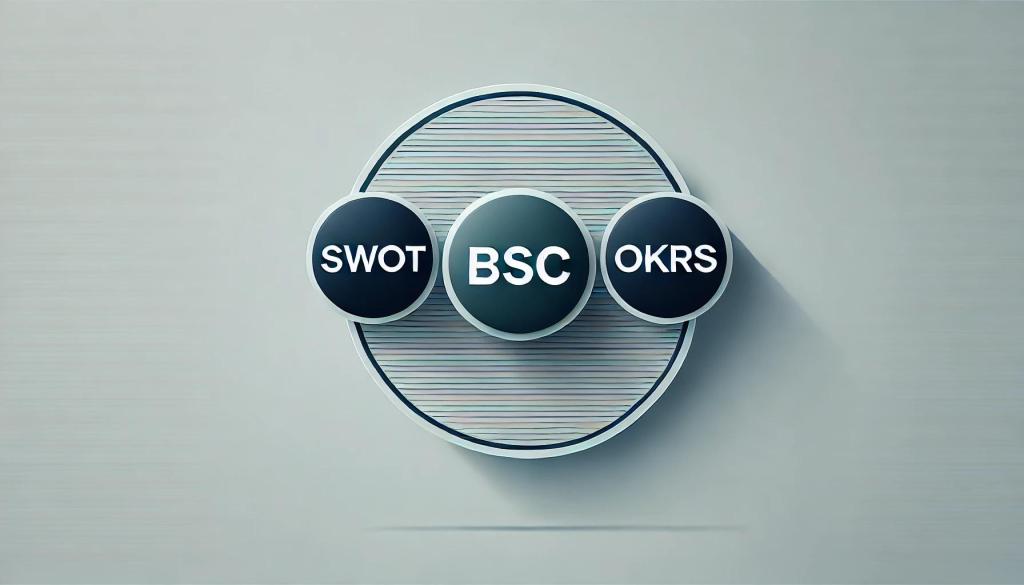
Defining Strategy & Objectives: Leveraging SWOT, BSC, and OKRs for Business Success

In my decades of experience guiding strategy across diverse industries, three tools have consistently proven invaluable in defining strategic priorities and translating them into actionable business objectives:

  • SWOT (Strengths, Weaknesses, Opportunities, Threats): A classic tool to evaluate internal strengths and weaknesses alongside external opportunities and threats, providing a foundation for strategic direction.
  • BSC (Balanced Scorecard): A comprehensive framework for translating vision into a cohesive strategy by aligning performance measures across four critical dimensions: Financial, Customer, Internal Processes, and Learning & Growth.
  • OKRs (Objectives & Key Results): A goal-setting methodology that connects organizational priorities with measurable outcomes, ensuring alignment from leadership to individual contributors.

By combining SWOT, BSC, and OKRs, you can create a powerful and structured approach to crafting and executing strategy, particularly in fast-evolving environments like digital transformation. Below, I’ll guide you step-by-step on how to leverage these tools together for maximum impact.


1. Start with SWOT for Strategic Context

  • Purpose: Assess the internal and external environment to identify key factors that will influence your strategy and transformation.
  • Steps:
    1. Strengths: Identify what your organization does well (e.g., strong brand, skilled workforce, innovative culture).
    2. Weaknesses: Pinpoint areas for improvement (e.g., outdated systems, skill gaps).
    3. Opportunities: Highlight trends and external factors to capitalize on (e.g., market demand for digital solutions, emerging technologies).
    4. Threats: Recognize external risks (e.g., competition, regulatory challenges).

Output:

  • A clear understanding of your strategic position.
  • Prioritized areas to address through transformation initiatives.

Example:
Opportunity: Growing demand for AI-powered customer service → Translate into a strategic initiative in the BSC.


2. Use BSC to Build the Strategic Framework

  • Purpose: Translate insights from the SWOT analysis into a cohesive strategy by defining objectives across four perspectives (Financial, Customer, Internal Processes, and Learning & Growth).
  • Steps:
    1. Map SWOT findings to the BSC perspectives:
      • Strengths align with opportunities in Financial and Customer perspectives.
      • Weaknesses inform Internal Processes and Learning & Growth goals.
      • Threats guide risk mitigation strategies.
    2. Develop a strategy map:
      • Financial: Increase digital revenue by 25%.
      • Customer: Improve digital customer experience.
      • Internal Processes: Automate customer service workflows.
      • Learning & Growth: Upskill employees in AI technologies.
    3. Assign KPIs for each objective to measure success.

3. Deploy OKRs to Drive Execution

  • Purpose: Break down the high-level goals from the BSC into actionable, measurable objectives and key results for teams and individuals.
  • Steps:
    1. Define Objectives aligned with BSC goals:
      • Objective (from Learning & Growth): Upskill employees in AI technologies.
    2. Set Key Results to track progress:
      • Key Result 1: Train 80% of employees in AI basics by Q2.
      • Key Result 2: Certify 30% of employees in advanced AI tools by Q3.
    3. Cascade OKRs to teams and individuals:
      • Team Goal: Develop a company-wide AI training program.
      • Individual Goal: Complete AI certification by Q2.
    4. Track and adapt OKRs quarterly to ensure alignment with strategic priorities.

Example:
OKR Objective: “Improve digital customer engagement.”

  • Key Results:
    • Launch a new mobile app by Q2.
    • Increase app adoption rate by 20% within 6 months.
    • Achieve an NPS of 70+ for app users.

4. Create Feedback Loops and Monitor Progress

  • Use BSC to monitor long-term strategic outcomes through lagging indicators.
  • Use OKRs to track short-term execution progress through leading indicators.
  • Regularly review SWOT to reassess internal and external dynamics and adjust priorities.

Example Monitoring:

  • BSC KPI: Customer Satisfaction Score (CSAT) = 85% (measured quarterly).
  • OKR Key Result: Resolve 90% of customer queries within 24 hours (measured monthly).
  • SWOT Insight: Competitor launching a similar app → Accelerate product updates.

How They Work Together

  1. SWOT identifies where to focus the strategy by analyzing your environment.
  2. BSC builds a structured, holistic strategy to address SWOT findings.
  3. OKRs break down the strategy into actionable goals and drive execution across teams.

Benefits of the Combined Approach

  • Strategic Alignment: SWOT ensures relevance; BSC provides structure; OKRs drive execution.
  • Agility: OKRs enable rapid adaptation to changing conditions without deviating from the overarching strategy.
  • Measurability: BSC tracks long-term outcomes, while OKRs track immediate results, ensuring balanced performance management.
  • Focus: SWOT and BSC prioritize initiatives, and OKRs ensure focus on execution.

By leveraging SWOT, BSC, and OKRs together, organizations can create a clear, actionable roadmap for strategy implementation and transformation, balancing long-term vision with short-term adaptability.

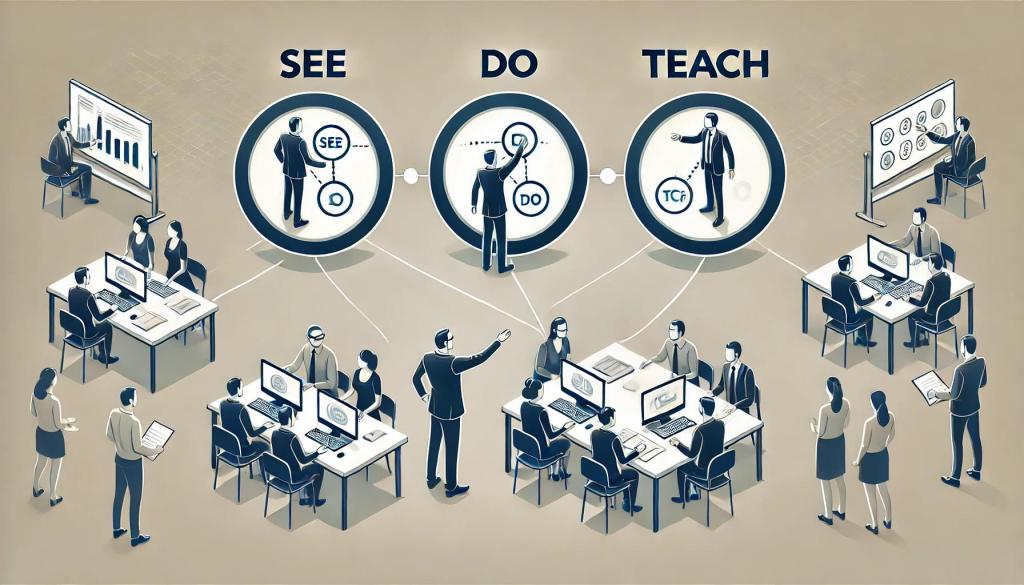
See Do Teach Method – A Powerful Approach to Learning and Capability Building

The See Do Teach method is a transformative approach to skill acquisition, team development, and leadership building. Rooted in experiential learning, it creates a dynamic cycle of observation, practice, and instruction that ensures not only the mastery of tasks but also the empowerment of individuals to become educators themselves. Here’s why it works so effectively and how it can be applied.


Why the See Do Teach Method Works

The See Do Teach method is built on the principle of active engagement, which is proven to improve retention and understanding. Each stage builds on the last, creating a progressive learning pathway that embeds skills deeply: 1. Observation Enhances Understanding: Seeing a task performed by an expert provides learners with a clear example of success, demystifying the process and showcasing best practices. 2. Practice Solidifies Skills: Doing the task immediately after observing allows learners to apply their newfound knowledge in a safe environment, with room for feedback and improvement. 3. Teaching Deepens Expertise: Explaining and demonstrating a skill to others reinforces the teacher’s mastery and ensures that knowledge is disseminated effectively across teams.


Breaking Down the Steps

Step 1: See

Observation is the foundation of the See Do Teach method. In this stage, learners watch a skilled individual perform a task, noting critical steps, techniques, and nuances.

Example: In order to train people inside the organization to become transformation managers, I worked with one of the big 4 strategic consultancies to show actual projects in the organization to our candidates.

Step 2: Do

After observing, learners move on to hands-on practice. Here, they replicate the task under guidance, applying what they’ve seen while gaining firsthand experience.

Example: After observing the expert consultants on one or two projects, the roles changed, with the internal teams executing the projects and the expert consultants reviewing and giving advice.

Step 3: Teach

The final stage involves teaching the newly learned skill to others. This step requires learners to organize their understanding and communicate it effectively, cementing their knowledge.

Example: After executing a couple of projects themselves, the internal teams became teachers to the next cohort of candidates (and the external consultants phased out) in their See-Do cycle.


The Flywheel Effect

The See Do Teach method operates as a flywheel—a self-reinforcing cycle that gains momentum over time. As learners become teachers, they perpetuate the process, creating a culture of continuous learning and growth. Over time, this approach not only spreads knowledge but also cultivates leadership qualities and drives organizational excellence.

Example in Practice: A company adopts the See Do Teach method to train employees on a new software system. Initially, a few experts demonstrate its usage (See). Next, these employees practice and refine their skills (Do). Finally, they teach the system to others (Teach). Within weeks, the organization’s proficiency with the software grows exponentially, reducing reliance on external trainers and fostering a collaborative learning environment.


Conclusion

The See Do Teach method is a simple yet profound approach to learning that combines observation, hands-on practice, and teaching. By embedding this cycle into your organization or personal development strategies, you can create a robust framework for skill acquisition, team growth, and leadership development. Over time, the method becomes a powerful flywheel, driving sustainable success and empowering individuals to achieve their full potential.