
6 Lean Concepts for Successful Digital Transformation

Introduction

Many digital transformations fail not because of technology, but because new ways of working don’t stick. Lean Thinking provides a structured approach to ensure transformation is effectively executed and fully integrated into daily operations. This article explores six key Lean concepts—five foundational tools plus Leader Standard Work—to create lasting impact.


1. Value Stream Mapping (VSM) – Creating Clarity on “As-Is” vs. “To-Be”

Why It Matters

Before launching any digital initiative, organizations need a clear understanding of current inefficiencies and how digital solutions will improve them. Value Stream Mapping (VSM) provides a structured approach to visualize workflows, eliminate waste, and define the future state.

Example: Bosch’s ERP Optimization

Bosch implemented a new digital ERP system but faced slow adoption and workflow inefficiencies. By applying VSM, they mapped the As-Is state, identified bottlenecks, and redesigned the To-Be process with simplified digital interfaces, leading to a 25% productivity increase.

Approach: VSM Mapping Framework

  • Step 1: Identify key processes and stakeholders.
  • Step 2: Map the As-Is state (manual steps, delays, inefficiencies).
  • Step 3: Define the To-Be state with digital solutions.
  • Step 4: Identify improvement actions and implementation roadmap.

2. Standard Work – Defining the New Way of Working

Why It Matters

Even after successful digital transformation, employees often revert to old habits unless new processes are clearly documented and reinforced. Standard Work ensures consistent execution and prevents variation.

Example: Danaher’s Digital Compliance

Danaher struggled with process inconsistencies post-digital transformation. By implementing Standard Work documents, they aligned global teams on digital best practices and saw a significant reduction in process variability.

Approach: Standard Work Document Structure

  • Process Name & Purpose
  • Step-by-Step Instructions (with screenshots where needed)
  • Roles & Responsibilities
  • Success Metrics
  • Review & Continuous Improvement Plan

3. Daily Management – Sustaining the Transformation

Why It Matters

Sustained digital transformation requires continuous monitoring and adjustment. Daily Management ensures teams review progress, discuss obstacles, and reinforce digital processes in short, structured meetings.

Example: Amazon’s AI-Driven Operations

Amazon implemented daily huddles to monitor its AI-driven supply chain. By reviewing key performance indicators (KPIs) daily, teams proactively resolved adoption issues, improving fulfillment speed while reducing errors.

Approach: Daily Management Meeting Agenda

  • Review Key Metrics (digital adoption, process performance)
  • Identify Issues & Roadblocks
  • Escalate Unresolved Problems
  • Celebrate Successes & Recognize Contributions

4. Visual Management – Making Gaps & Performance Visible

Why It Matters

Without clear visibility, employees and leaders struggle to measure progress. Visual Management (dashboards, Kanban boards) helps teams quickly identify gaps, monitor KPIs, and drive accountability.

Example: Toyota’s Digital Maintenance Dashboards

Toyota faced adoption resistance for a new digital maintenance system. By introducing real-time dashboards, operators could instantly see performance gaps, leading to a higher engagement rate.

Approach: Visual Management Board Setup

  • Objective & Metrics Displayed (efficiency, downtime, compliance)
  • Real-Time Data Updates
  • Clear Color-Coding for Performance Trends
  • Actionable Insights Section for Teams

5. Problem Solving – Addressing Gaps Systematically

Why It Matters

Digital transformations introduce new challenges. Instead of temporary fixes, structured problem-solving methods like PDCA (Plan-Do-Check-Act) or A3 thinking ensure issues are resolved at the root cause level.

Example: Ford’s Digital Production Line Improvements

Ford faced efficiency issues after implementing digital production tracking. By using PDCA cycles, they systematically identified and eliminated process gaps, improving production flow and reducing defects.

Approach: A3 Problem-Solving Approach

  • Define the Problem
  • Analyze Root Causes
  • Develop & Test Countermeasures
  • Implement & Sustain Improvements

6. Leader Standard Work – Driving & Sustaining Transformation

Why It Matters

Leaders play a crucial role in ensuring digital transformation is reinforced daily. Without active leadership engagement, employees revert to familiar processes, undermining long-term success.

Example: GE’s Lean Leadership Coaching

GE implemented Leader Standard Work (LSW) to ensure leaders consistently reinforced digital adoption. By embedding digital coaching into daily and weekly routines, they sustained digital engagement long after rollout.

Approach: Leader Standard Work Checklist

  • Daily: Attend team huddles, review dashboards, coach employees.
  • Weekly: Conduct structured digital adoption reviews, address problem-solving needs.
  • Monthly: Assess long-term impact, adjust Standard Work where needed.

Conclusion

Digital transformation is not just about technology—it’s about sustained operational change. By embedding these six Lean concepts, organizations can move from execution to full integration, ensuring digital initiatives drive long-term value.

Call to Action:

  • Which of these Lean concepts resonates most with your transformation journey?
  • How are you ensuring that digital changes truly stick in your organization?
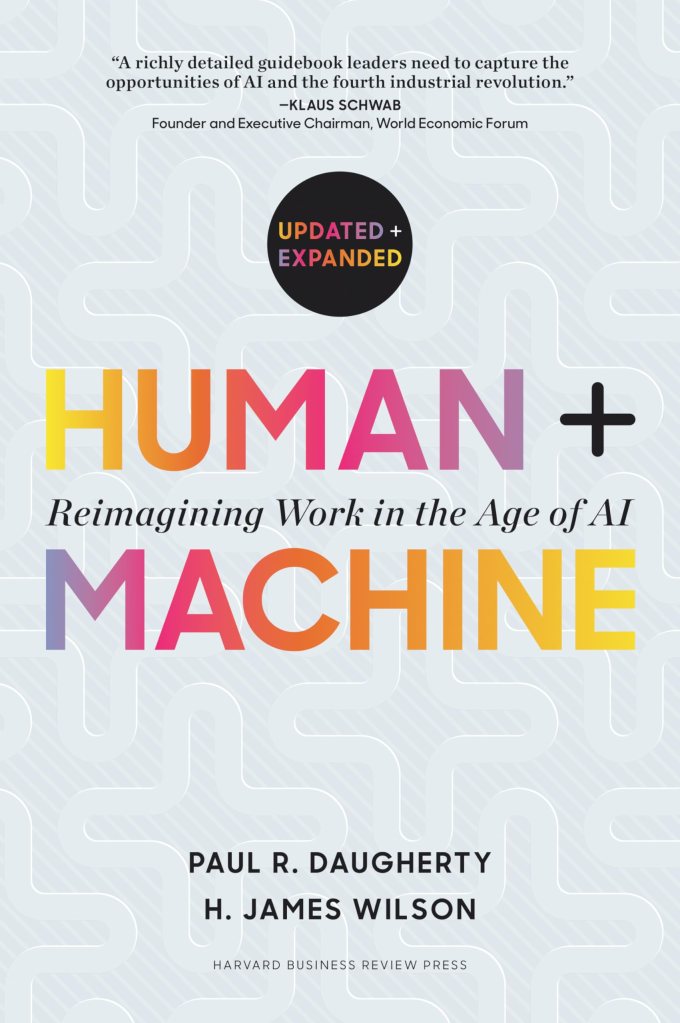
Future of Work: Insights from Human + Machine

Human + Machine: Reimagining Work in the Age of AI, written by Paul R. Daugherty and H. James Wilson, has garnered widespread acclaim for its insightful and practical approach to integrating artificial intelligence into business operations. Readers have praised its clear analysis and inspiring examples of AI applications across various industries.

The book is recognized as a thought-provoking and essential resource for understanding the future of work, emphasizing the symbiotic relationship between humans and machines. It makes complex AI concepts approachable, providing a compelling roadmap for leaders aiming to harness AI’s full potential while navigating its ethical and operational complexities.

More than just a technical guide, Human + Machine serves as a strategic playbook for executives seeking to lead AI-driven transformation effectively.


The Core Premise: Collaborative Intelligence

At the heart of Human + Machine is the concept of collaborative intelligence—the idea that AI is not a replacement for human talent but a powerful complement that enhances human capabilities. The book challenges the traditional view of automation as a job eliminator and instead presents a more optimistic, structured framework where AI and humans work symbiotically to create exponential value.

Daugherty and Wilson introduce the MELDS Framework, which identifies five crucial shifts in how businesses can approach AI transformation:

  • Mindset Shift – Moving from a technology-first approach to a human-centered AI adoption strategy.
  • Experimentation – Encouraging a culture of iterative learning and agile AI deployments.
  • Leadership – Ensuring executives play a hands-on role in AI integration and ethics.
  • Data – Harnessing the right data in ethical, transparent, and responsible ways.
  • Skills – Investing in upskilling and reskilling employees to thrive in AI-driven environments.

This review captures the key insights from each chapter and provides actionable takeaways for leaders looking to embrace AI effectively.


Chapter Summaries and Leadership Actions

Chapter 1: The AI Work Redesign Imperative

  • AI does not simply replace jobs; it transforms them by reshaping roles and responsibilities.
  • Leadership Action: Conduct workforce planning to identify roles that AI will augment rather than replace. Create structured transition plans to help employees adapt.

Chapter 2: The Missing Middle: Humans + AI

  • Successful AI adoption requires a balance between automation and human judgment.
  • Leadership Action: Invest in training programs that help employees collaborate with AI, emphasizing decision-making, creativity, and ethics.

Chapter 3: Reimagining Business Processes with AI

  • AI-driven process redesign should focus on innovation rather than mere efficiency.
  • Leadership Action: Develop a framework to assess which processes should be augmented, automated, or reinvented entirely using AI.

Chapter 4: AI and Data: The Foundation of Intelligent Workflows

  • AI’s effectiveness depends on high-quality, structured, and unbiased data.
  • Leadership Action: Implement strong data governance policies to ensure data integrity, fairness, and transparency in AI applications.

Chapter 5: Scaling AI Across the Enterprise

  • Many companies struggle to scale AI beyond initial pilot projects.
  • Leadership Action: Create cross-functional AI implementation teams and define clear metrics to measure AI adoption success.

Chapter 6: AI and the Future of Work

  • AI will create new job roles while transforming existing ones.
  • Leadership Action: Establish continuous learning initiatives and reskilling programs to equip employees with AI-relevant competencies.

Chapter 7: The Responsible AI Framework

  • AI governance should focus on transparency, accountability, and fairness.
  • Leadership Action: Develop and enforce AI ethics guidelines to ensure responsible deployment and mitigate bias.

Chapter 8: A Leader’s Guide to Reimagining Processes

  • Leaders must actively drive AI-powered transformation by fostering an experimental and adaptable mindset.
  • Leadership Action: Encourage a culture of AI-driven experimentation, allowing teams to iterate on AI solutions and adapt based on real-world learnings.

Chapter 9: Eight New Fusion Skills for an AI Workplace

  • AI-driven work environments require hybrid skill sets that combine human expertise with AI capabilities.
  • Leadership Action: Create mentorship and coaching programs that help employees develop these fusion skills:
    • Intelligent Inquiry – Leveraging AI insights effectively through critical questioning.
    • Bot-Based Empowerment – Collaborating with AI tools to enhance productivity.
    • Reciprocal Learning – Ensuring continuous feedback between humans and AI systems.
    • Relentless Reimagination – Consistently rethinking processes and strategies.
    • Holistic Judgment – Balancing AI-generated insights with human intuition.
    • Ethical Guardian – Upholding ethical standards in AI development and deployment.
    • AI Exponential Thinking – Using AI-driven innovation to scale business impact.
    • Constructive Skepticism – Evaluating AI recommendations critically to avoid over-reliance.

Final Thoughts

Human + Machine provides a compelling roadmap for senior executives and transformation leaders seeking to leverage AI as a force multiplier for their businesses. By integrating real-world case studies, actionable frameworks, and the latest AI trends, the updated edition is more relevant than ever for organizations embarking on or refining their AI journeys.

The book’s optimistic yet pragmatic approach distinguishes it from other AI literature, making it an essential read for leaders looking to harness AI’s full potential while navigating its ethical and operational complexities. If you are serious about the future of work and digital transformation, Human + Machine is a must-read that will equip you with the strategies needed to stay ahead in an AI-powered world.

Effective Stakeholder Management in Digital Transformation

Digital transformation is a complex journey that requires strategic stakeholder management to ensure success. Engaging and managing stakeholders effectively across the four key phases—Strategy to Plan, Plan to Execution, Execution to Integration, and Sustainable Adoption to Value Realization—is essential. Below, we explore how to assess and engage key stakeholder groups throughout the transformation, leveraging three industry-proven frameworks I have applied in several different formats.

Using Mendelow’s Power-Interest Matrix for Stakeholder Assessment

To determine which stakeholders to focus on, organizations can use Mendelow’s Power-Interest Matrix, which categorizes stakeholders based on their level of influence (power) and engagement (interest). Stakeholders with high power and high interest should be closely managed, as they are critical to transformation success. Those with high power but low interest should be kept satisfied with updates, while those with low power but high interest should be informed and engaged appropriately. Finally, stakeholders with low power and low interest require only periodic monitoring to ensure alignment.

Applying the ADKAR Model to Assess Stakeholder Participation

The ADKAR model (Awareness, Desire, Knowledge, Ability, Reinforcement) is useful for evaluating where stakeholders stand in terms of engagement. Leaders should assess whether stakeholders are aware of the transformation, desire to participate, have the knowledge and ability to support the changes, and receive reinforcement to sustain engagement. This structured approach helps tailor communication and interventions to move stakeholders through the engagement journey effectively.

Leveraging Kotter’s Change Model for Stakeholder Engagement

Once stakeholders are assessed, Kotter’s 8-Step Change Model provides a roadmap for actively engaging them. This includes creating urgency, building coalitions of support, developing a clear vision, removing obstacles, generating quick wins, and institutionalizing change. By applying these principles, organizations can maintain momentum and ensure stakeholders are aligned and invested throughout the transformation.

In the following section, I will describe how to assess and engage with five main stakeholder groups—Employees, Managers, Executives/Leadership, Board of Management/Shareholders, and Customers/Suppliers/Industry Stakeholders—leveraging the aforementioned models.

1. Employees

Assessing Employees

The ADKAR model provides a structured approach to assessing employees’ engagement in digital transformation. Organizations should evaluate:

  • Awareness: Do employees understand the need for transformation?
  • Desire: Are they motivated to participate and embrace change?
  • Knowledge: Do they have the necessary training and information to contribute?
  • Ability: Can they effectively apply new skills and technologies?
  • Reinforcement: Are there mechanisms in place to sustain long-term adoption?

By leveraging this model, leaders can identify gaps and tailor interventions to support employees throughout the transformation journey.

Activities Across the Phases:

  • Strategy to Plan: Measure awareness, attitudes, and perceived impact on roles.
  • Plan to Execution: Identify resistance points and skill gaps.
  • Execution to Integration: Measure adoption levels and operational challenges.
  • Sustainable Adoption to Value Realization: Track engagement and digital proficiency.

Engaging Employees

  • Strategy to Plan: Communicate the vision, expected impact, and upskilling opportunities.
  • Plan to Execution: Involve in pilot programs and provide structured change management support.
  • Execution to Integration: Celebrate quick wins and reinforce cultural alignment.
  • Sustainable Adoption to Value Realization: Foster continuous learning and career growth.

2. Managers

Assessing Managers

For managers, the ADKAR approach can also be applied. The activities across the four phases include:

  • Strategy to Plan: Evaluate readiness to champion change and operational alignment with business plans.
  • Plan to Execution: Determine their ability and capacity to lead teams through change.
  • Execution to Integration: Assess change leadership effectiveness.
  • Sustainable Adoption to Value Realization: Ensure they incorporate the new ways of working into daily practices and sustain leadership in digital culture.

Engaging Managers

  • Strategy to Plan: Provide training and involve them in shaping implementation roadmaps, ensuring they are part of the guiding coalition as per Kotter’s model.
  • Plan to Execution: Equip with leadership coaching and transformation frameworks, enabling them to remove barriers and create short-term wins.
  • Execution to Integration: Ensure ongoing coaching and recognition programs to sustain acceleration and institutionalize changes.
  • Sustainable Adoption to Value Realization: Embed digital thinking in business processes and continuously reinforce new behaviors.

3. Executives/Leadership

Assessing Executives/Leadership

Executives and leadership play a crucial role in digital transformation due to their high power and interest, as highlighted in Mendelow’s Power-Interest Matrix. Given their influence, continuous engagement is essential to ensure alignment and sustained commitment.

Engaging Executives/Leadership

  • Strategy to Plan: Secure sponsorship, define measurable transformation goals, and obtain commitment on resources.
  • Plan to Execution: Maintain active participation in governance structures and involve them early through pilots and demos.
  • Execution to Integration: Adapt strategies based on real-time insights and ensure transformation adoption is part of leadership reviews.
  • Sustainable Adoption to Value Realization: Ensure transformation becomes an ongoing capability.

4. Board of Management/Shareholders

Assessing Board of Management/Shareholders

  • Strategy to Plan: Identify expectations and risk tolerance.
  • Plan to Execution: Monitor risk perceptions and alignment with corporate goals.
  • Execution to Integration: Measure financial and strategic outcomes.
  • Sustainable Adoption to Value Realization: Validate return on investment and future opportunities.

Engaging Board of Management/Shareholders

  • Strategy to Plan: Present a compelling business case with ROI projections.
  • Plan to Execution: Provide transparent reporting on progress and early wins.
  • Execution to Integration: Align transformation metrics with business performance.
  • Sustainable Adoption to Value Realization: Demonstrate sustained business value and future scalability.

5. Customers, Suppliers, and Industry Stakeholders

Engaging Customers

  • Strategy to Plan: Communicate potential benefits and involve key customers in feedback loops.
  • Plan to Execution: Gather feedback through prototype testing and focus groups.
  • Execution to Integration: Showcase improvements and deepen customer relationships.
  • Sustainable Adoption to Value Realization: Reinforce engagement through personalization and innovation.

Engaging Suppliers/Partners

  • Strategy to Plan: Engage in co-innovation discussions and assess digital readiness.
  • Plan to Execution: Co-develop implementation roadmaps.
  • Execution to Integration: Strengthen collaboration through integrated systems.
  • Sustainable Adoption to Value Realization: Strengthen ecosystems with emerging technologies.

Engaging Community & Industry/Competitors

  • Strategy to Plan: Share thought leadership and collaborate on industry best practices.
  • Plan to Execution: Establish partnerships for innovation and shared learning.
  • Execution to Integration: Share success stories and participate in industry forums.
  • Sustainable Adoption to Value Realization: Lead industry conversations and future transformations.

By structuring stakeholder management through a stakeholder-centric approach across the four phases of digital transformation, organizations can maximize adoption, mitigate risks, and ensure long-term success.

How to Marry Process Management and AI

Process management is a critical function in any organization since it is through processes that organizations add value. Better-managed processes lead to higher efficiency, alignment with strategic goals, and continuous improvement. Due to new technologies and better availability of data, including AI, work can become faster and easier. The main challenge lies in how to integrate these advancements effectively into operations.

Inspired by the article in the Jan-Feb 2025 issue of Harvard Business Review titled “How to Marry Process Management and AI – Make sure people and your technology work well together,” I reflected on the challenges I have encountered during my 15+ years of involvement in transformations in this area. In this article, I will use the 7 Step framework described in the HBR article. While the original article provides interesting industry examples and insights by the authors, I will focus on my own approaches, tools I have worked with and firsthand experiences at each step.


Step 1: Establish Ownership and Define a High-Level Framework

The first step in process management is to identify key business owners responsible for overseeing and implementing process improvements:

  • Begin by creating a high-level process framework outlining the top-level processes in the organization. Existing frameworks, such as those from the American Production & Quality Center (APQC), can serve as references.
  • Establish executive-level owners who commit to driving standardization, implementation, and optimization of these processes.
  • Collaborate with executive owners to appoint dedicated Business Process Owners (BPOs) and Business Process Experts (BPEs). These roles should be empowered to design future processes, drive implementation, and ensure alignment with organizational strategies and goals.

Personal Insight: In my experience, getting executive buy-in at the outset is crucial. A clear and visual process framework often helps bring stakeholders on board by providing a shared vision and helping them understand where and how value is created.


Step 2: Identify Process Customers

Understanding who benefits from a process is essential. Customers, in my view, fall into two categories:

  • External customers: These are stakeholders such as customers, suppliers, and partners who experience the outcomes of the organization’s end-to-end processes (and pay for them).
  • Internal customers: These are internal teams directly influenced by the processes being (re-)designed. It is vital that they understand how their roles fit into the broader end-to-end picture to avoid silo thinking.

Personal Insight: I have found that facilitating workshops with representatives from both external and internal customer groups is invaluable. For example, mapping customer journeys together often uncovers pain points and fosters alignment on objectives.


Step 3: Map Out Existing Processes

A comprehensive mapping of current processes is crucial. Traditional Lean tools, including workshops and stakeholder sessions, are effective for documenting processes. Process mining tools further enhance this step by providing data-driven insights into:

  • Process flows and durations
  • Bottlenecks and inefficiencies
  • Process variations and exceptions

Personal Insight: I have worked extensively with process mining solutions such as Celonis, UIpath, and Signavio. While each tool has its pros and cons, they all provide actionable insights that can drive fact-based decisions. However, technology alone isn’t enough—you must have dedicated teams ready to act on the findings. Otherwise, these tools risk becoming underutilized investments.


Step 4: Establish Performance Metrics and Targets

Setting relevant and measurable KPIs (Key Performance Indicators) is critical. Metrics should directly link to business objectives, such as:

  • Customer satisfaction
  • Process efficiency and cost savings
  • Compliance and risk reduction

Personal Insight: Benchmarking KPIs against industry standards often helps set realistic targets. Combining data-driven insights with customer feedback will enable you to create alignment with all stakeholders on which targets to go for.


Step 5: Consider Process Enablers

Technology plays a key role in enhancing process efficiency. Core IT platforms, such as ERP systems (e.g., SAP), CRM tools (e.g., Salesforce), and HR platforms (e.g., Workday), offer significant automation potential. Additionally:

  • Workflow automation tools like Pega enable cross-platform processes.
  • Robotic Process Automation (RPA) streamlines repetitive tasks.
  • AI-powered tools like Optical Character Recognition (OCR) automate activities such as invoice or email processing.

Choosing the right enablers is essential. The number of companies offering process enabling tools is growing rapidly, and core IT platforms are increasingly AI-enabled (e.g., AgentForce in Salesforce and Joule for SAP).

Personal Insight: You need to strike a balance in your investments. Core IT platforms typically require larger investments and longer implementation times. In contrast, more specialized solutions can deliver faster impact but are often limited in scope and may become obsolete over time.


Step 6: Process Design & Simulation

Designing new processes should be a collaborative effort involving BPOs, subject matter experts, and functional business owners. Platforms such as Signavio and ARIS facilitate standardized documentation and link designs to IT and data architectures. These platforms also enable:

  • Documentation of new processes
  • Comparison of current vs. proposed processes using process mining outputs
  • Creation of Digital Twins to test and optimize execution models

Personal Insight: I have seen great value in involving cross-functional teams early in the design phase. Well documented and co-owned processes are crucial as foundation for building the technology solutions. Digital Twins help to simulate multiple process models, enabling us to choose the optimal approach before implementation.


Step 7: Implement and Monitor

Implementation is one of the most challenging aspects of process management. Success requires a structured rollout plan and robust change management strategies. To track progress and effectiveness:

  • Use dashboards to monitor adoption rates and usage.
  • Leverage process mining tools to evaluate the utilization of new processes.
  • Conduct regular business reviews to assess adoption rates and performance.

Personal Insight: In my experience, transparent communication during rollout builds trust and minimizes resistance. Dashboards that visualize progress in real time drives the right discussion in teams and enables them to drive towards required milestones and celebrate achievements.


Final Thoughts

Process management is not a one-time exercise but an ongoing cycle of analysis, optimization, and automation. Organizations that embrace data-driven decision-making and leverage emerging technologies will achieve greater efficiency, improve customer experiences, and maintain a competitive edge. AI is accelerating this shift, making now the ideal time to enhance your process management skills.