The Secret Sauce Behind Successful Transformation: Learning Journeys

In the execution-to-integration phase of any transformation, the greatest challenge is rarely the strategy — it’s the sustainability of new ways of working. Systems are deployed, structures reconfigured, and operating models redesigned. Yet months later, familiar patterns resurface, and old behaviors creep back in.

Why? Because true change doesn’t happen in workshops or at go-live milestones. It happens in the daily decisions, habits, and interactions of people across the organization.

This is where learning journeys come in.

Unlike traditional training events — often one-off, content-heavy, and disconnected from real work — learning journeys are spaced, orchestrated experiences designed to embed new skills, mindsets, and behaviors over time. They are:

  • Sequenced over weeks or months to allow for reflection, practice, and reinforcement.
  • Multi-modal, blending digital modules, live sessions, coaching, peer learning, and on-the-job application.
  • Contextualized to individual roles, workflows, and transformation objectives.
  • Integrated into governance and feedback loops to drive ongoing alignment and improvement.

Well-designed learning journeys do more than teach — they transform. They make change tangible, repeatable, and sticky by equipping people to not only understand the new way, but live it every day.


1. Adult Learning Theory: How Adults Learn Best

Research by Malcolm Knowles and successors highlights that adults:

  • Are self-directed.
  • Bring prior experience into the learning process.
  • Want immediate relevance and application.
  • Learn best through problem-solving.

Implication for transformation:
Traditional training sessions or slide decks won’t embed new behaviors. Instead, adults need learning that:

  • Is contextual (tied to their specific role).
  • Offers autonomy (flexibility to explore and apply).
  • Encourages reflection (linking new knowledge with real experiences).

This supports transformation by turning employees into co-creators of change, not just recipients of it.


2. Learning Experience Design : Make It Stick Through Design

Learning Experience Design blends cognitive science, user-centered design, and storytelling to create memorable and effective learning environments. Drawing from design thinking, it emphasizes:

  • Empathizing with learners’ day-to-day.
  • Designing around “moments that matter.”
  • Prototyping and iterating based on feedback.

Implication for transformation:
Learning Experience Design ensures that learning is not generic. For example:

  • Frontline employees might need immersive, task-based simulations.
  • Managers may benefit more from leadership labs and decision-making scenarios.
  • Learning pathways can be designed to mirror the actual rollout of new processes or systems.

This design-first approach increases relevance, reduces friction, and drives higher engagement—key enablers for sustainable transformation.


3. Behavioral Science & Habit Formation: Anchor New Norms

Transformation success is often about small, repeatable behavior changes. Behavioral science — especially the work of James Clear (Atomic Habits) and Charles Duhigg (The Power of Habit) — shows that habits are formed when:

  • Behaviors are simple and easy to start.
  • Triggers and cues are present in the environment.
  • There is immediate reward or reinforcement.

Implication for transformation:
Learning journeys that incorporate behavior design principles:

  • Use nudges to prompt the right actions.
  • Reinforce micro-successes (e.g., feedback after using a new system).
  • Encourage habit stacking (e.g., “after daily team huddle, review dashboard insights”).

Embedding these principles turns learning from a one-off event into an ongoing cycle of behavior reinforcement, helping transformation stick at the individual and team levels.


4. Integration Best Practices: Close the Loop Between Learning and Doing

Many transformations fail in the post-implementation phase because of a disconnect between system rollout, new processes, and human capability. Integration-focused learning journeys:

  • Align with change governance (e.g., steerco and sponsor feedback loops).
  • Include just-in-time learning embedded into the workflow (performance support tools, coaching, etc.).
  • Monitor learning adoption KPIs (e.g., skill application, confidence, usage rates).

Three critical integration elements:

a) Learning must be embedded in the work, not adjacent to it

  • Learning and performance support tools within workflows.
  • Just-in-time content linked to system/process steps.

b) Learning should be part of governance and leadership rituals

  • Incorporating learning metrics into program dashboards.
  • Leaders modelling and discussing learning progress in townhalls and reviews.

c) Learning journeys need to be tracked and adapted over time

  • Use of learning analytics, feedback loops, and continuous improvement.
  • Mechanisms to sunset legacy habits and reinforce new ones.

Together, these principles ensure learning is not a support function but a core engine of transformation delivery.


5. Real-World Examples of Learning Journeys in Action

Microsoft – From Culture Reset to Growth Mindset

  • Journey led by Satya Nadella blending storytelling, role-modeling, and digital learning platforms.
  • Emphasis on curiosity, collaboration, and continuous learning.

Unilever – Scaling Digital Fluency Globally

  • Created a Digital Learning Framework aligned to business capabilities.
  • Personalized learning portals, regional academies, and gamification.

Siemens – MyLearning World as a Platform for Change

  • Centralized platform delivering self-paced, role-based learning.
  • Integration into performance management and project onboarding.

Each example reinforces a core principle: learning drives transformation when it is lived, not just launched.


6. Implementation Blueprint: How to Design and Launch a Learning Journey

Step 1: Define the learning objectives linked to transformation goals

  • What behaviors must change? In which roles?

Step 2: Map the journey — sequence, format, duration

  • Consider phases: Awareness → Enablement → Practice → Reinforcement
  • Blend formats: eLearning, workshops, peer sessions, toolkits, coaching

Step 3: Integrate with business cadence and systems

  • Embed in onboarding, performance reviews, and tool workflows.

Step 4: Mobilize champions and leadership sponsors

  • Leaders should learn with their teams — visibly and vocally.

Step 5: Monitor progress and adapt in real time

  • Use learning analytics, pulse surveys, feedback loops.

Tip: Treat learning like a product — continuously evolving with new features and feedback.


Conclusion: From Learning to Lasting Change

“Transformation sticks when people change how they work — and that only happens through intentional, immersive learning journeys.”

If your transformation includes a plan, a system, and a steering committee — it should also include a learning journey.

Harnessing Curiosity for Digital Transformation Success

In a world shaped by accelerating change, new technologies, and shifting customer expectations, digital transformation is no longer optional—it’s a strategic imperative. But technology alone doesn’t drive transformation. The real differentiator lies in human capabilities—and among these, curiosity stands out as a key enabler of successful change.

Curiosity: The Human Advantage in a Digital World

Curiosity isn’t just about asking questions. It’s the active pursuit of new knowledge, perspectives, and possibilities. It fuels learning, drives innovation, and enables people to adapt quickly in fast-moving environments.

As Deloitte puts it in their research on digital fluency, “Curiosity is the catalyst that allows people to keep pace with technology—and lead with it.”

For transformation leaders, this has direct implications:

  • Curious individuals are more likely to experiment, learn, and improve.
  • Curious teams are better at breaking silos, seeking input, and iterating solutions.
  • Curious cultures are more resilient, adaptive, and open to what’s next.

Research That Connects Curiosity to Transformation Success

The Business Case for Curiosity – Harvard Business Review (Francesca Gino, 2018)

  • Curious employees are more engaged, collaborative, and better at decision-making.
  • Organizations that foster curiosity experience higher innovation and reduced groupthink.
  • Read the article →

The Mindsets of Transformation Leaders – McKinsey & Company

  • Highlights intellectual curiosity as a hallmark of successful transformation leaders.
  • Curious leaders are more willing to challenge assumptions, adapt strategy, and engage stakeholders.
  • Read the article →

Human + Machine: Reimagining Work in the Age of AI – IBM Institute for Business Value

  • Emphasizes that in the AI era, human skills like curiosity are vital complements to automation.
  • Curious individuals are better at interpreting data, asking better questions, and guiding AI to impactful outcomes.
  • Explore Human + Machine →

The Curiosity Gap: What Holds Teams Back

Despite its value, many organisations unintentionally stifle curiosity:

  • Rigid hierarchies discourage questioning.
  • Execution pressure leaves no room for reflection.
  • Fear of failure shuts down experimentation.
  • Overreliance on expertise limits fresh thinking.

These are culture issues, not people issues. Leaders play a pivotal role in changing this dynamic.

How Leaders Can Foster Curiosity

Transformation leaders can amplify curiosity in practical, powerful ways:

  • Ask more than tell: Use open-ended questions to spark exploration.
  • Normalize experimentation: Frame pilots and prototypes as learning opportunities.
  • Listen actively: Signal that new ideas and diverse perspectives are valued.
  • Reward growth: Recognize not just performance, but how people learn and adapt.
  • Lead with humility: Show you’re learning too—and invite others on the journey.

Final Word

Digital transformation is ultimately a human transformation. And curiosity is the mindset that keeps humans relevant, engaged, and future-ready.

It’s what helps a data analyst spot an emerging trend, a product manager test a radical new idea, and a CEO rethink a decades-old business model. It’s also what allows us to partner more effectively with AI—asking the right questions, interpreting signals, and imagining better solutions.

As you lead your organisation through transformation, don’t just invest in platforms and capabilities. Invest in curiosity. It’s the spark that turns potential into progress.

Harnessing Lessons Learned for Digital Transformation Success

Introduction

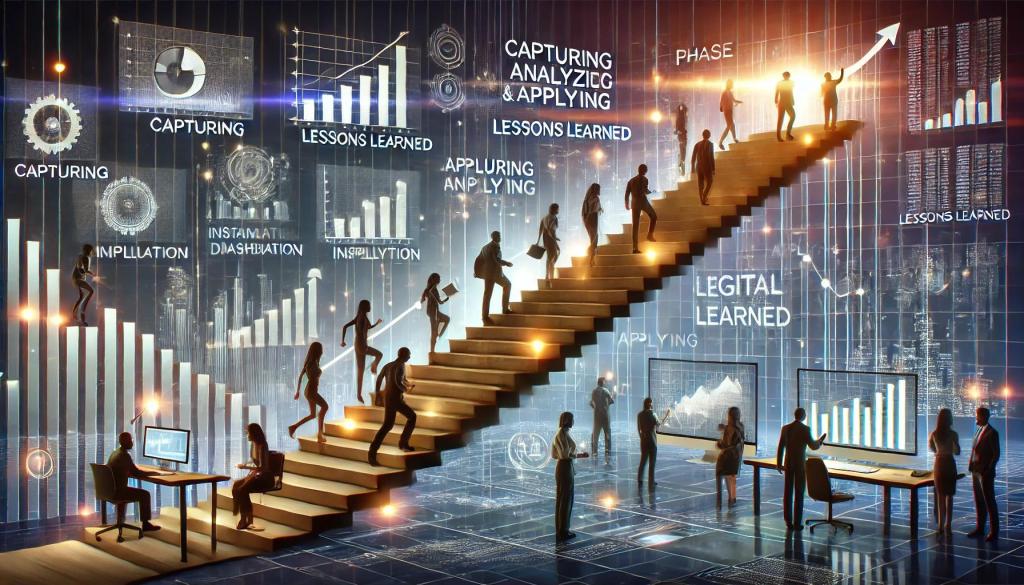
Digital transformation is a complex, multi-phase journey that requires continuous learning and adaptation. Organizations that systematically capture and apply lessons learned improve their chances of success, avoid recurring mistakes, and optimize future initiatives. However, many businesses either fail to document insights effectively or struggle to integrate them into future projects. This article explores the importance of lessons learned, effective approaches, implementation strategies, key challenges, and a step-by-step framework to ensure digital transformation efforts benefit from past experiences.

1. Why Lessons Learned Matter in Digital Transformation

Lessons learned play a crucial role in refining digital transformation efforts. Key benefits include:

  • Preventing Repeated Mistakes – Avoiding common pitfalls saves time, money, and resources.
  • Enhancing Decision-Making – Informed decisions based on past experiences lead to better outcomes.
  • Optimizing Processes – Continuous improvement ensures that digital initiatives become more efficient over time.
  • Strengthening Governance – Ensuring that digital transformation governance evolves based on real-world insights.
  • Fostering a Learning Culture – Encouraging teams to reflect on successes and failures promotes organizational agility.

By embedding a structured approach to lessons learned, companies can accelerate their digital transformation efforts and increase long-term success.

2. Approaches to Capturing Lessons Learned

Various methodologies exist for systematically gathering insights from digital transformation initiatives. Some of the most effective approaches include:

A. After-Action Review (AAR)

Originally developed by the U.S. Army, the AAR method uses a structured reflection process:

  1. What was supposed to happen?
  2. What actually happened?
  3. What went well and why?
  4. What can be improved and how?

B. Agile Retrospectives

Agile methodologies integrate lessons learned through retrospectives at the end of each sprint. Common questions include:

  • What worked well?
  • What didn’t go well?
  • What can we improve?
  • What are the action items for the next sprint?

C. Post-Implementation Review (PIR)

A PIR is conducted after a major project phase or the entire transformation effort. It assesses:

  • Whether objectives were met.
  • What worked and what didn’t.
  • How to apply insights to future transformations.

D. Lessons Learned Workshops

Interactive sessions where key stakeholders share insights using structured formats like:

  • Start, Stop, Continue review.
  • Root Cause Analysis (Fishbone Diagrams).
  • Timeline Review with Thematic Grouping of Issues.

E. Knowledge Repositories for Continuous Learning

Organizations can store and share lessons learned using:

  • Digital transformation playbooks.
  • Internal knowledge management systems (e.g., Confluence, SharePoint).
  • AI-driven repositories for searchability.

3. Applying Lessons Learned in Digital Transformation

Capturing lessons is only valuable if they are applied effectively. Here’s how organizations can ensure insights drive real change:

A. Integrate Lessons into Governance Structures

  • Assign a Lessons Learned Owner or a Transformation Office to track insights.
  • Make lessons learned a standard agenda item in executive steering committees.
  • Embed lessons into organizational decision-making and process improvements.

B. Apply Lessons at Different Levels

  1. Sprint/Phase Level – Immediate adjustments based on sprint retrospectives.
  2. Program/Portfolio Level – Aggregate insights to refine digital strategies.
  3. Enterprise Level – Consolidate transformation-wide lessons into strategic planning.

C. Communicate Lessons Effectively

Lessons must reach the right audience to be impactful:

AudienceCommunication Approach
ExecutivesSummary reports, dashboard insights
Project TeamsWorkshops, sprint reviews, playbooks
Entire OrganizationNewsletters, town halls, digital knowledge hubs

D. Overcoming Common Challenges

ChallengeSolution
Teams don’t document lessonsUse structured templates and automated tools
Lessons aren’t appliedAssign accountability and track implementation
Resistance to discussing failuresFoster a blame-free culture focused on improvement
Insights are scattered across silosCentralize in a knowledge management system

4. Step-by-Step Framework for Implementing Lessons Learned

Step 1: Capture Lessons at Key Milestones

  • Conduct lessons learned sessions at the end of sprints, phases, and projects.
  • Use structured templates and tools to document insights.

Step 2: Analyze and Prioritize Insights

  • Categorize lessons into successes, challenges, opportunities, and recommendations.
  • Use analytical tools like Root Cause Analysis to extract meaningful trends.
  • Prioritize lessons based on strategic impact.

Step 3: Integrate Lessons into Future Projects

  • Update digital transformation playbooks and methodologies.
  • Include lessons learned in risk management frameworks.
  • Modify Standard Operating Procedures (SOPs) based on past experiences.

Step 4: Communicate Lessons Across the Organization

  • Tailor communication methods for different audiences (executives, teams, entire organization).
  • Use multiple channels: internal portals, newsletters, videos, and town halls.
  • Establish a continuous feedback loop for ongoing knowledge sharing.

Step 5: Institutionalize Lessons for Long-Term Impact

  • Develop a centralized knowledge repository for easy retrieval of past lessons.
  • Create a Lessons Learned Playbook to guide future teams, e.g. with Do’s and Don’ts
  • Measure impact through KPIs such as reduced project failures, increased efficiency, and improved adoption rates.

5. Final Thoughts

Applying lessons learned in digital transformation is essential for continuous improvement and long-term success. By embedding a structured process into governance, decision-making, and cultural practices, organizations can avoid repeating mistakes, optimize their digital initiatives, and drive better outcomes.

Successful digital transformations are not just about implementing new technologies—they are about learning, adapting, and evolving. Organizations that prioritize lessons learned as a strategic capability will lead the way in digital excellence.