Optimizing Your Supply Chain – Leveraging the Power of Digital Platforms and AI

In an era of increasing global complexity, supply chain optimization has become a strategic imperative for organizations. Digital platforms and AI-driven automation are reshaping traditional supply chain operations, enhancing efficiency, reducing costs, and improving agility. This article explores the key digital platforms driving supply chain transformation, the role of emerging technologies like IoT, Blockchain, and RPA, and the cutting-edge AI innovations that elevate supply chain performance to the next level.

The Role and Relevance of Digital Platforms

Digital platforms form the backbone of modern supply chains, enabling organizations to streamline processes, improve visibility, and drive data-driven decision-making. The five most critical platforms in supply chain automation include:

1. Enterprise Resource Planning (ERP)

ERP systems integrate core business processes, including finance, procurement, manufacturing, and supply chain management. These platforms provide a unified system to manage inventory, automate workflows, and enhance decision-making. Leading ERP solutions such as SAP S/4HANA, Oracle ERP Cloud, and Microsoft Dynamics 365 offer AI-powered insights and real-time analytics.

Most companies operate one or more ERP systems (often from older generations), and the challenge is to bring these to a level where new platforms can be easily connected, and Data and AI solutions can be built on top of them.

2. Supply Chain Management (SCM)

SCM platforms optimize planning, execution, and collaboration across the entire supply chain. They facilitate demand forecasting, inventory optimization, and supplier collaboration. Solutions like Blue Yonder, Kinaxis, and E2open use AI and machine learning to improve forecasting accuracy and reduce operational risks.

These solutions are highly connected to ERP and other supply chain systems. They aim to create end-to-end visibility from suppliers to customers. By integrating information from various source systems, SCM solutions optimize the supply chain. To create value from SCM systems, organizations must consider the complete data ecosystem.

3. Transportation Management Systems (TMS)

TMS platforms focus on optimizing logistics, freight management, and route planning. By leveraging AI-driven automation, companies can reduce transportation costs and improve delivery efficiency. Platforms like Oracle Transportation Management (OTM) and SAP Transportation Management enhance real-time visibility and dynamic routing.

With growing complexities such as ultra-fast lead times, precise delivery windows, carbon footprint reduction, and multi-partner logistics networks, TMS systems are becoming crucial elements in supply chains.

4. Warehouse Management Systems (WMS)

WMS platforms automate inventory tracking, order fulfillment, and warehouse optimization. AI-enhanced solutions such as Manhattan Associates WMS, Blue Yonder WMS, and SAP WMS integrate robotics and IoT sensors to streamline warehouse operations and improve accuracy.

Many companies are already operating fully automated warehouses where WMS systems play a vital role in managing and tracking all materials and movements within the warehouse.

5. Procurement & Supplier Collaboration Platforms

Procurement platforms ensure efficiency in sourcing, supplier relationship management, and contract execution. Solutions like SAP Ariba and Coupa use AI to enhance supplier negotiations, reduce procurement cycles, and mitigate risks.

To maximize value, these solutions must be fully integrated with finance and other supply chain processes. Poor integration leads to inefficiencies and additional manual work.

Beyond Digital Platforms: The Role of IoT, Blockchain, and RPA

While digital platforms provide the foundational infrastructure, technologies such as IoT, Blockchain, and RPA further enhance supply chain automation.

1. Internet of Things (IoT)

IoT devices provide real-time visibility into logistics, warehousing, and inventory management. Sensors and connected devices track shipments, monitor temperature-sensitive goods, and improve predictive maintenance.

Platforms like Microsoft Azure IoT and AWS IoT enable organizations to analyze real-time supply chain data for improved decision-making.

2. Blockchain for Supply Chain Transparency

Blockchain technology enhances security, traceability, and trust in supply chain transactions. By creating an immutable ledger, Blockchain enables the use of smart contracts—self-executing agreements with terms directly embedded in code. These contracts automate processes such as payments and order verifications, eliminating intermediaries and manual paperwork. This automation reduces administrative workloads and accelerates transaction times.

Companies like Walmart have implemented Blockchain to track produce from farms to stores. This system ensures product authenticity and safety while also reducing traceability time during recalls.

3. Robotic Process Automation (RPA)

RPA automates repetitive and time-consuming supply chain tasks, such as invoice processing, order entry, and supplier onboarding. Solutions like UiPath, Automation Anywhere, and Blue Prism improve efficiency, reduce human errors, and accelerate transaction cycles.

Schneider Electric implemented RPA to streamline its supply chain processes by eliminating non-value-adding tasks. This automation enabled employees to focus on core activities, significantly improving operational efficiency. During health crises, RPA facilitated faster distribution flows between remote sites and distribution centers.

AI: The Game-Changer in Supply Chain Optimization

Beyond digital platforms and automation technologies, AI is revolutionizing supply chain management by enabling predictive analytics, intelligent automation, and advanced decision-making capabilities.

1. AI in Demand Forecasting and Planning

AI-driven demand forecasting leverages historical data, market trends, and real-time inputs to enhance accuracy and optimize inventory levels. Danone adopted machine learning to refine its demand forecasting and planning, reducing forecast errors by 20% and lost sales by 30%.

2. AI in Warehouse and Fulfillment Operations

AI-powered robotics and computer vision enhance warehouse automation by improving picking accuracy, reducing labor dependency, and optimizing storage utilization. Amazon has integrated robotic solutions like Proteus and Sparrow into its fulfillment centers, significantly increasing operational efficiency and reducing costs.

3. AI in Logistics and Transportation

AI-driven logistics solutions optimize route planning, reduce fuel consumption, and improve delivery timelines. DHL has adopted AI to analyze delivery addresses, traffic patterns, and weather conditions to identify the most efficient routes, leading to lower fuel consumption and improved delivery times.

4. AI in Supply Chain Risk Management

AI assists organizations in identifying risks, predicting disruptions, and developing proactive strategies. IBM Watson Supply Chain leverages AI-powered insights to enhance resilience by analyzing vast datasets to predict potential disruptions and suggest mitigation strategies.

Conclusion

The convergence of digital platforms, automation technologies, and AI is redefining the future of supply chain management. By leveraging ERP, SCM, TMS, WMS, and Procurement platforms alongside IoT, Blockchain, and RPA, organizations can achieve end-to-end supply chain automation. AI further amplifies these capabilities by driving predictive insights, improving agility, and optimizing operations.

For supply chain and transformation leaders, the imperative is clear: Embracing digital platforms and AI-driven automation is no longer optional—it is a strategic necessity to remain competitive and resilient in an ever-evolving global landscape.
Designing High-Impact Value Chains with the Business Model Canvas

Introduction

In today’s fast-moving business environment, companies must regularly reflect on how they generate value and translate this into effective business models. Organizations can operate multiple business models simultaneously, combining products and services, and within each model, there can be various versions of value chains (e.g., Software as a Service, Product as a Service, Information as a Service).

All these value chains must be executed efficiently within the company’s processes and systems. A great strategy without the right operational backbone is bound to fail. This article provides a structured approach to designing and optimizing value chains, supported by industry best practices.


1. Business Models: The Foundation of Value Creation

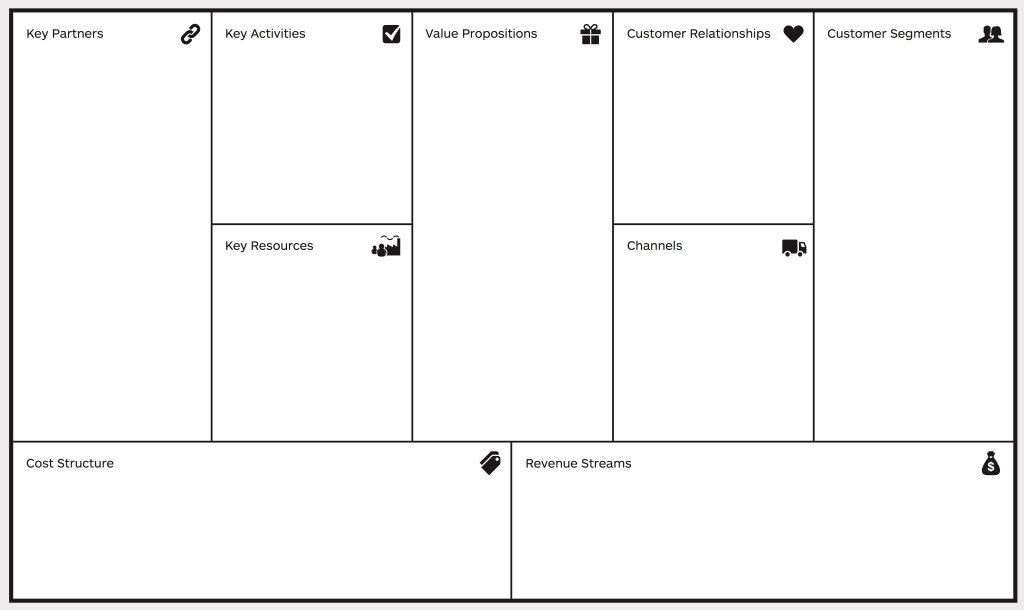
A business model describes how a company creates, delivers, and captures value. The Business Model Canvas (BMC), developed by Alexander Osterwalder, provides a structured framework to outline key business components.

The Business Model Canvas – Key Components

  1. Customer Segments – Who are we creating value for?
  2. Value Propositions – What unique value do we deliver?
  3. Channels – How do we reach customers?
  4. Customer Relationships – How do we interact with customers?
  5. Revenue Streams – How do we generate revenue?
  6. Key Resources – What assets do we need?
  7. Key Activities – What critical actions drive our value proposition?
  8. Key Partnerships – What external players support us?
  9. Cost Structure – What are the main costs of running our model?

The BMC offers a strategic blueprint, but executing it efficiently requires a well-structured value chain.


2. The Value Chain: Translating the Business Model into Execution

A value chain, as introduced by Michael Porter, breaks down a company’s activities into primary and support activities, helping companies understand how value is created, where efficiencies can be gained, and where competitive advantage can be built.

How the Value Chain Aligns with the Business Model Canvas

Business Model ComponentCorresponding Value Chain Activities
Key ActivitiesDefines core primary activities such as operations, logistics, and marketing.
Key ResourcesAligns with support activities like technology, HR, and procurement.
Key PartnershipsInfluences supply chain design and outsourcing decisions.
Cost StructureDetermines cost-efficiency priorities within the value chain.
Revenue StreamsShapes customer service, sales processes, and after-sales support.
ChannelsDefines logistics, distribution, and digital engagement strategies.

By aligning the business model with the value chain, companies ensure that strategy translates into action efficiently.


3. Using the Business Model Canvas to Optimize the Value Chain

To effectively link business model design and value chain execution, executives can follow these steps:

Step 1: Define the Business Model with the BMC

  • Map out the nine components of your business model.
  • Identify the most critical elements that drive differentiation and profitability.

Step 2: Mapping the Value Chain Based on the Business Model

Once a company has defined its business model, the next step is to ensure that its value chain is structured to deliver on that strategy.

Key Actions in Value Chain Mapping:
  1. Identify Primary Activities – Core operations that create and deliver value.
  2. Identify Support Activities – The enablers that ensure efficiency and sustainability.
  3. Assess Alignment – Ensuring every activity reinforces the business model.
Example: Amazon’s Primary Activities
  • Inbound Logistics: Leverages an advanced supply chain with vast warehousing & supplier integration.
  • Operations: Runs automated, AI-driven fulfillment centers to optimize costs and speed.
  • Outbound Logistics: Owns Amazon Prime delivery & logistics rather than relying on third-party couriers.
  • Marketing & Sales: Uses data-driven recommendations, digital advertising, and memberships for retention.
  • Customer Service: AI-driven chatbots, 24/7 customer support, and seamless return processes.

📌 Takeaway: Amazon’s business model (e-commerce + logistics) succeeds because its value chain supports ultra-fast, cost-effective fulfillment.

Example: Apple’s Support Activities
  • Firm Infrastructure: Centralized design & marketing strategy in California, manufacturing in China via Foxconn.
  • HR Management: Attracts world-class talent, focusing on innovation and brand culture.
  • Technology Development: Heavy investment in R&D, patents, and ecosystem lock-in (iOS, App Store).
  • Procurement: Strong global supplier agreements for critical components like microchips & OLED screens.

📌 Takeaway: Apple’s business model (premium design & ecosystem lock-in) is supported by an R&D-driven value chain.


4. Aligning the Value Chain with Competitive Strategy

Once a company maps its value chain, the final step is ensuring it aligns with its competitive strategy. This means optimizing the value chain to reinforce cost leadership, differentiation, or innovation.

Three Strategic Approaches to Value Chain Optimization

1️⃣ Cost Leadership – Competing on price by minimizing costs and optimizing efficiency.
2️⃣ Differentiation – Competing on uniqueness by offering superior quality, service, or branding.
3️⃣ Innovation & Agility – Competing on speed, adaptability, and digital transformation.

1. How to Align the Value Chain with Cost Leadership:

✔ Inbound Logistics: Optimize supply chain efficiency by sourcing cost-effective materials and reducing waste (e.g., bulk purchasing, supplier consolidation).
✔ Operations:
Automate manufacturing and streamline processes to reduce labor and production costs (e.g., lean manufacturing, Six Sigma, AI-powered automation).
✔ Outbound Logistics:
Optimize distribution to lower transportation costs (e.g., route optimization, just-in-time delivery).
✔ Marketing & Sales:
Leverage data-driven performance marketing to reduce customer acquisition costs (e.g., digital-only campaigns, AI ad targeting).
✔ Customer Service:
Use self-service technology (e.g., chatbots, AI-driven support) to reduce support costs.

Example: Ryanair (Cost Leadership Strategy)
  • Uses secondary airports with lower landing fees.
  • Standardizes on a single aircraft type (Boeing 737) to reduce maintenance costs.
  • No ticketing offices—100% online sales eliminate distribution costs.
  • Charges for extras (baggage, seat selection) to keep ticket prices low.

📌 Takeaway: Ryanair’s low-cost airline model is viable because its value chain aggressively minimizes costs at every stage.

2. How to Align the Value Chain with Differentiation:

✔ Inbound Logistics: Secure high-quality, exclusive, or ethically sourced materials (e.g., luxury fashion, premium coffee beans, rare tech components).
✔ Operations:
Invest in craftsmanship, advanced R&D, or personalization to create a unique product (e.g., Tesla’s self-driving AI, Apple’s design-first approach).
✔ Outbound Logistics:
Create a premium experience (e.g., Apple’s seamless unboxing & in-store Genius Bar support).
✔ Marketing & Sales:
Use brand storytelling, exclusivity, and high-touch engagement (e.g., Nike’s athlete-driven branding).
✔ Customer
Service: Offer concierge-level, loyalty-driven experiences (e.g., luxury car brands providing VIP treatment).

Example: LVMH (Differentiation Strategy)
  • Sources exclusive, rare materials for brands like Louis Vuitton, Dior, and Moët & Chandon.
  • Maintains in-house artisanal production in Italy and France rather than outsourcing.
  • Uses flagship stores in premium locations rather than mass-market retailers.
  • Relies on celebrity endorsements, elite fashion events, and exclusivity-driven advertising.

📌 Takeaway: LVMH’s ability to command premium pricing comes from a value chain designed for brand exclusivity, quality, and aspirational appeal.

3. How to Align the Value Chain with Innovation & Agility:

✔ Inbound Logistics: Maintain flexible supply chains to adapt quickly to new trends and demands.
✔ Operations:
Use digital technology, cloud-based infrastructure, and AI to enable rapid iteration.
✔ Outbound Logistics:
Deploy agile distribution models to support real-time customer needs.
✔ Marketing & Sales:
Leverage data, AI, and personalization for hyper-targeted engagement.
✔ Customer Service:
Implement predictive and proactive AI-driven service to enhance experience.

🔹 Example: Spotify (Digital Streaming Disruption)

  • Inbound Logistics: Uses a data-driven licensing model to determine which songs and artists to feature based on listening patterns.
  • Operations: Invests in machine learning algorithms for personalized recommendations (e.g., “Discover Weekly”).
  • Outbound Logistics: No physical distribution; everything is delivered via cloud-based streaming.
  • Marketing & Sales: Uses AI-driven insights to personalize marketing, and leverages artist partnerships for exclusive content.
  • Customer Service: Focuses on frictionless digital experience, self-service help centers, and AI-driven chat support.

📌 Takeaway: Spotify’s competitive edge in music streaming comes from an AI-powered, data-driven value chain that enables agility and innovation.


5. Key Takeaways

For businesses aiming to build competitive advantage, aligning the Business Model Canvas with a well-structured value chain is essential.

A business model defines intent → The value chain ensures execution.
Use the Business Model Canvas to clarify strategic priorities.
Map your value chain to identify inefficiencies and enhance competitive advantage.
Leverage digital tools to enhance agility in execution.

By continuously aligning strategy with execution, companies can drive sustainable growth and operational excellence.


Conclusion

In the era of digital transformation and competitive disruption, companies must ensure their value chain supports their business model effectively. The Business Model Canvas provides a clear framework to define strategy, while Value Chain Analysis ensures efficient execution.

Executives who successfully integrate these frameworks will position their organizations for long-term success, resilience, and market leadership.

How to Marry Process Management and AI

Process management is a critical function in any organization since it is through processes that organizations add value. Better-managed processes lead to higher efficiency, alignment with strategic goals, and continuous improvement. Due to new technologies and better availability of data, including AI, work can become faster and easier. The main challenge lies in how to integrate these advancements effectively into operations.

Inspired by the article in the Jan-Feb 2025 issue of Harvard Business Review titled “How to Marry Process Management and AI – Make sure people and your technology work well together,” I reflected on the challenges I have encountered during my 15+ years of involvement in transformations in this area. In this article, I will use the 7 Step framework described in the HBR article. While the original article provides interesting industry examples and insights by the authors, I will focus on my own approaches, tools I have worked with and firsthand experiences at each step.


Step 1: Establish Ownership and Define a High-Level Framework

The first step in process management is to identify key business owners responsible for overseeing and implementing process improvements:

  • Begin by creating a high-level process framework outlining the top-level processes in the organization. Existing frameworks, such as those from the American Production & Quality Center (APQC), can serve as references.
  • Establish executive-level owners who commit to driving standardization, implementation, and optimization of these processes.
  • Collaborate with executive owners to appoint dedicated Business Process Owners (BPOs) and Business Process Experts (BPEs). These roles should be empowered to design future processes, drive implementation, and ensure alignment with organizational strategies and goals.

Personal Insight: In my experience, getting executive buy-in at the outset is crucial. A clear and visual process framework often helps bring stakeholders on board by providing a shared vision and helping them understand where and how value is created.


Step 2: Identify Process Customers

Understanding who benefits from a process is essential. Customers, in my view, fall into two categories:

  • External customers: These are stakeholders such as customers, suppliers, and partners who experience the outcomes of the organization’s end-to-end processes (and pay for them).
  • Internal customers: These are internal teams directly influenced by the processes being (re-)designed. It is vital that they understand how their roles fit into the broader end-to-end picture to avoid silo thinking.

Personal Insight: I have found that facilitating workshops with representatives from both external and internal customer groups is invaluable. For example, mapping customer journeys together often uncovers pain points and fosters alignment on objectives.


Step 3: Map Out Existing Processes

A comprehensive mapping of current processes is crucial. Traditional Lean tools, including workshops and stakeholder sessions, are effective for documenting processes. Process mining tools further enhance this step by providing data-driven insights into:

  • Process flows and durations
  • Bottlenecks and inefficiencies
  • Process variations and exceptions

Personal Insight: I have worked extensively with process mining solutions such as Celonis, UIpath, and Signavio. While each tool has its pros and cons, they all provide actionable insights that can drive fact-based decisions. However, technology alone isn’t enough—you must have dedicated teams ready to act on the findings. Otherwise, these tools risk becoming underutilized investments.


Step 4: Establish Performance Metrics and Targets

Setting relevant and measurable KPIs (Key Performance Indicators) is critical. Metrics should directly link to business objectives, such as:

  • Customer satisfaction
  • Process efficiency and cost savings
  • Compliance and risk reduction

Personal Insight: Benchmarking KPIs against industry standards often helps set realistic targets. Combining data-driven insights with customer feedback will enable you to create alignment with all stakeholders on which targets to go for.


Step 5: Consider Process Enablers

Technology plays a key role in enhancing process efficiency. Core IT platforms, such as ERP systems (e.g., SAP), CRM tools (e.g., Salesforce), and HR platforms (e.g., Workday), offer significant automation potential. Additionally:

  • Workflow automation tools like Pega enable cross-platform processes.
  • Robotic Process Automation (RPA) streamlines repetitive tasks.
  • AI-powered tools like Optical Character Recognition (OCR) automate activities such as invoice or email processing.

Choosing the right enablers is essential. The number of companies offering process enabling tools is growing rapidly, and core IT platforms are increasingly AI-enabled (e.g., AgentForce in Salesforce and Joule for SAP).

Personal Insight: You need to strike a balance in your investments. Core IT platforms typically require larger investments and longer implementation times. In contrast, more specialized solutions can deliver faster impact but are often limited in scope and may become obsolete over time.


Step 6: Process Design & Simulation

Designing new processes should be a collaborative effort involving BPOs, subject matter experts, and functional business owners. Platforms such as Signavio and ARIS facilitate standardized documentation and link designs to IT and data architectures. These platforms also enable:

  • Documentation of new processes
  • Comparison of current vs. proposed processes using process mining outputs
  • Creation of Digital Twins to test and optimize execution models

Personal Insight: I have seen great value in involving cross-functional teams early in the design phase. Well documented and co-owned processes are crucial as foundation for building the technology solutions. Digital Twins help to simulate multiple process models, enabling us to choose the optimal approach before implementation.


Step 7: Implement and Monitor

Implementation is one of the most challenging aspects of process management. Success requires a structured rollout plan and robust change management strategies. To track progress and effectiveness:

  • Use dashboards to monitor adoption rates and usage.
  • Leverage process mining tools to evaluate the utilization of new processes.
  • Conduct regular business reviews to assess adoption rates and performance.

Personal Insight: In my experience, transparent communication during rollout builds trust and minimizes resistance. Dashboards that visualize progress in real time drives the right discussion in teams and enables them to drive towards required milestones and celebrate achievements.


Final Thoughts

Process management is not a one-time exercise but an ongoing cycle of analysis, optimization, and automation. Organizations that embrace data-driven decision-making and leverage emerging technologies will achieve greater efficiency, improve customer experiences, and maintain a competitive edge. AI is accelerating this shift, making now the ideal time to enhance your process management skills.