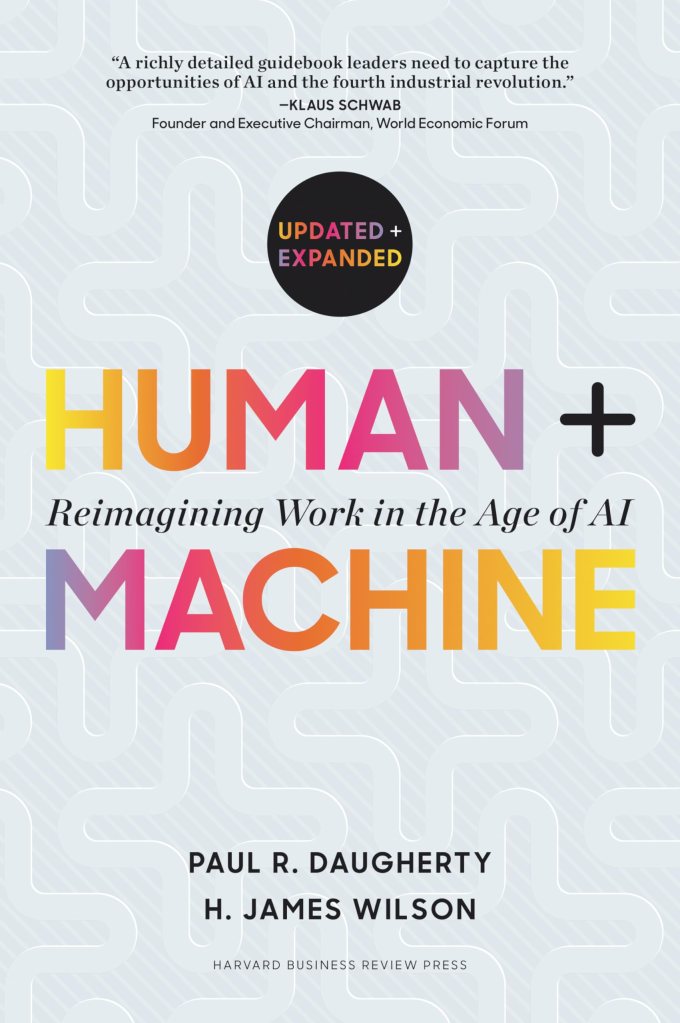
Human + Machine: Reimagining Work in the Age of AI, written by Paul R. Daugherty and H. James Wilson, has garnered widespread acclaim for its insightful and practical approach to integrating artificial intelligence into business operations. Readers have praised its clear analysis and inspiring examples of AI applications across various industries.
The book is recognized as a thought-provoking and essential resource for understanding the future of work, emphasizing the symbiotic relationship between humans and machines. It makes complex AI concepts approachable, providing a compelling roadmap for leaders aiming to harness AI’s full potential while navigating its ethical and operational complexities.
More than just a technical guide, Human + Machine serves as a strategic playbook for executives seeking to lead AI-driven transformation effectively.
The Core Premise: Collaborative Intelligence
At the heart of Human + Machine is the concept of collaborative intelligence—the idea that AI is not a replacement for human talent but a powerful complement that enhances human capabilities. The book challenges the traditional view of automation as a job eliminator and instead presents a more optimistic, structured framework where AI and humans work symbiotically to create exponential value.
Daugherty and Wilson introduce the MELDS Framework, which identifies five crucial shifts in how businesses can approach AI transformation:
- Mindset Shift – Moving from a technology-first approach to a human-centered AI adoption strategy.
- Experimentation – Encouraging a culture of iterative learning and agile AI deployments.
- Leadership – Ensuring executives play a hands-on role in AI integration and ethics.
- Data – Harnessing the right data in ethical, transparent, and responsible ways.
- Skills – Investing in upskilling and reskilling employees to thrive in AI-driven environments.
This review captures the key insights from each chapter and provides actionable takeaways for leaders looking to embrace AI effectively.
Chapter Summaries and Leadership Actions
Chapter 1: The AI Work Redesign Imperative
- AI does not simply replace jobs; it transforms them by reshaping roles and responsibilities.
- Leadership Action: Conduct workforce planning to identify roles that AI will augment rather than replace. Create structured transition plans to help employees adapt.
Chapter 2: The Missing Middle: Humans + AI
- Successful AI adoption requires a balance between automation and human judgment.
- Leadership Action: Invest in training programs that help employees collaborate with AI, emphasizing decision-making, creativity, and ethics.
Chapter 3: Reimagining Business Processes with AI
- AI-driven process redesign should focus on innovation rather than mere efficiency.
- Leadership Action: Develop a framework to assess which processes should be augmented, automated, or reinvented entirely using AI.
Chapter 4: AI and Data: The Foundation of Intelligent Workflows
- AI’s effectiveness depends on high-quality, structured, and unbiased data.
- Leadership Action: Implement strong data governance policies to ensure data integrity, fairness, and transparency in AI applications.
Chapter 5: Scaling AI Across the Enterprise
- Many companies struggle to scale AI beyond initial pilot projects.
- Leadership Action: Create cross-functional AI implementation teams and define clear metrics to measure AI adoption success.
Chapter 6: AI and the Future of Work
- AI will create new job roles while transforming existing ones.
- Leadership Action: Establish continuous learning initiatives and reskilling programs to equip employees with AI-relevant competencies.
Chapter 7: The Responsible AI Framework
- AI governance should focus on transparency, accountability, and fairness.
- Leadership Action: Develop and enforce AI ethics guidelines to ensure responsible deployment and mitigate bias.
Chapter 8: A Leader’s Guide to Reimagining Processes
- Leaders must actively drive AI-powered transformation by fostering an experimental and adaptable mindset.
- Leadership Action: Encourage a culture of AI-driven experimentation, allowing teams to iterate on AI solutions and adapt based on real-world learnings.
Chapter 9: Eight New Fusion Skills for an AI Workplace
- AI-driven work environments require hybrid skill sets that combine human expertise with AI capabilities.
- Leadership Action: Create mentorship and coaching programs that help employees develop these fusion skills:
- Intelligent Inquiry – Leveraging AI insights effectively through critical questioning.
- Bot-Based Empowerment – Collaborating with AI tools to enhance productivity.
- Reciprocal Learning – Ensuring continuous feedback between humans and AI systems.
- Relentless Reimagination – Consistently rethinking processes and strategies.
- Holistic Judgment – Balancing AI-generated insights with human intuition.
- Ethical Guardian – Upholding ethical standards in AI development and deployment.
- AI Exponential Thinking – Using AI-driven innovation to scale business impact.
- Constructive Skepticism – Evaluating AI recommendations critically to avoid over-reliance.
Final Thoughts
Human + Machine provides a compelling roadmap for senior executives and transformation leaders seeking to leverage AI as a force multiplier for their businesses. By integrating real-world case studies, actionable frameworks, and the latest AI trends, the updated edition is more relevant than ever for organizations embarking on or refining their AI journeys.
The book’s optimistic yet pragmatic approach distinguishes it from other AI literature, making it an essential read for leaders looking to harness AI’s full potential while navigating its ethical and operational complexities. If you are serious about the future of work and digital transformation, Human + Machine is a must-read that will equip you with the strategies needed to stay ahead in an AI-powered world.
 Best of Digital Transformation